





There’s something quietly timeless about a traditional wedding cake. Maybe it’s the way it stands—tiered, balanced, often white or off-white, with tiny details you almost need to lean in to notice. Or maybe it’s the symbolism, even if we don’t always consciously think about it. The idea of a wedding cake representing a beginning, something shared, something crafted with care.
In Canada, for all the creativity and variety in modern celebrations, it’s the traditional wedding cake that still dominates. Despite the rise of dessert tables, donut walls, cupcake towers, and even ice cream bars, couples across the country keep coming back to the classic cake. And honestly? I get it.
I attended a wedding last summer in Toronto—pretty modern affair overall. Minimalist décor, live acoustic band, vegetarian menu. But when it came time for dessert, there it was: a tall, four-tiered vanilla cake with floral piping and delicate sugar roses. People applauded when the couple made the first cut. Guests lined up to take photos with it before it was sliced. It was familiar. Comforting, almost.
So why do these cakes still matter? Why, even now, when everything from vows to venues is being reimagined, do so many couples stick with the traditional tiered cake?
I think part of it has to do with legacy. Weddings, even the more laid-back ones, carry this sense of continuity. Of joining not just two people, but two families, two sets of expectations, sometimes even two cultures. And traditional cakes feel like a nod to that. They’re what our parents had at their weddings. What we saw in movies. What’s in old photo albums tucked away in basements. There’s a comfort in that continuity.
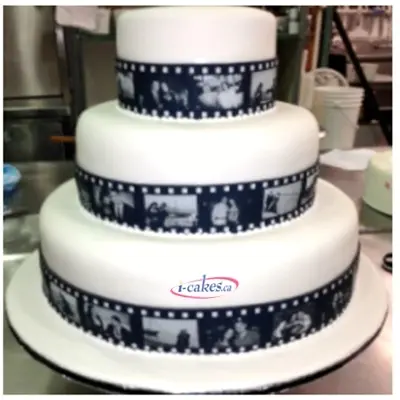
Then again, it’s not just nostalgia. Traditional wedding cakes are also, well, beautiful. When done right, they have a kind of elegance that doesn’t scream for attention. They’re not trendy or edgy, but they don’t need to be. That soft fondant finish, or even buttercream smoothed to near perfection—it just feels... right. Not overdone, not trying too hard.
That said, the definition of “traditional” has shifted, even if only slightly. A cake today might still have the classic shape, but the details are often tweaked—different colors, modern floral accents, edible gold leaf, things like that. Bakers are constantly balancing between keeping that timeless silhouette while giving it a fresh feel. It’s a subtle evolution, but it’s happening.
And, let’s be honest—there’s also the photography factor. Wedding photography is such a big deal now. Couples want photos that look polished but real, posed but not too posed. A traditional cake becomes a kind of centerpiece in those shots. It anchors the moment. Something about it just works with any backdrop, whether it’s a ballroom in Montreal or a rustic barn in the Okanagan.
I do wonder sometimes if part of the appeal is also about expectations. Like, you grow up watching weddings in media—TV, movies, even commercials—and there’s always this cake. You start to associate it with what a “real” wedding looks like. So when it’s your turn, even if you're the kind of person who normally avoids clichés, you might find yourself wanting that classic moment. The knife. The applause. The feeding-each-other-the-first-bite thing. It’s cheesy, but in a kind of charming, self-aware way.
Now, I’m not saying everyone feels this way. Some people genuinely prefer non-traditional desserts. Maybe they don’t like cake. Or maybe the thought of spending hundreds—sometimes thousands—on something that gets eaten in ten minutes doesn’t sit well. Fair enough. But even then, many couples still end up with a small traditional cake for the photos, if nothing else. Just to have that one image for the album. That says something.
And yes, let’s talk pricing for a moment. Traditional wedding cakes are not cheap. The multi-tiered designs, especially those with intricate piping or handcrafted sugar flowers, can cost anywhere from $300 to over $1000 depending on size and detail. But a lot of couples are willing to budget for it. Not because they’re trying to impress anyone, but because they view it as a meaningful part of the day. Not just dessert, but tradition. Presentation. A symbol, perhaps.
Also worth mentioning is that the flavor options have expanded a lot. A traditional wedding cake doesn’t have to be plain white cake with white icing anymore. Now you’ve got options—lemon, red velvet, earl grey, raspberry almond. I had one recently that was lavender honey and, honestly, it was one of the best slices of cake I’ve ever had. The outer look was completely classic, but the inside was full of personality. That’s something I really appreciate: keeping the tradition, but making it yours in some quiet way.
And yet, there’s a small contradiction there. Because while traditional wedding cakes are loved for their consistency, they’re also being subtly redefined all the time. So are they really “traditional” anymore? Maybe. Or maybe they’re just the canvas. The format we return to, again and again, because it leaves enough room to be both respectful of the past and expressive in the present.
I also think there’s something about the ritual. The whole “cutting the cake” moment—it’s oddly moving. Two people standing together, hands awkwardly on the knife, sometimes laughing nervously. It’s a tiny, shared task, and in a day filled with vows and speeches, it’s a quieter symbol of unity. Even if the couple’s not big on tradition, that moment tends to feel right.
Of course, not everyone eats the cake. Some guests are too full by then. Others just don’t like sweet desserts. And yet, the cake is still there. Part of the décor. Part of the plan. I once overheard someone say, “I don’t even like cake, but I’d still want a wedding cake—just for the moment, you know?” That stuck with me.
In the end, the popularity of traditional wedding cakes in Canada probably doesn’t come down to one reason. It’s a mix. A bit of cultural memory, a bit of visual appeal, and a fair amount of emotional significance. It’s not necessarily the most practical part of the day. But maybe that’s the point. Weddings aren’t always about practicality. They’re about gestures, symbols, shared moments.
And for a lot of Canadians, the traditional wedding cake still holds its place in all of that.